FORNUTRA® - A Leading CDMO Partner for Global Health Brands.
We support global health brands through rigorous formulation, transparent quality control, and agile manufacturing. Because every nutritional supplement we create embodies people's aspirations for a better life.
Experienced in nutraceutical ingredient sourcing, supplier evaluation, and procurement management.
Direct Answer
Qualify every ingredient supplier on four things: identity and assay, contamination panels, origin and lot traceability, and whether the specification matches your finished-product claim. Skip any one, and the certificate of analysis you eventually defend to a retailer or regulator rests on an unverified foundation. Here is how to check each of the four before you sign.
The certificate of analysis you will one day defend to a retailer, a regulator or a customer is written long before a single bottle is filled — it is written the day you choose your ingredient supplier. Buy a poorly specified fruit powder or a weakly characterised mineral salt, and no downstream quality control can recover what the raw material never contained.
The stakes keep rising. The global nutraceutical ingredients market was valued at about USD 98.5 billion in 2025 and is projected to reach USD 203.2 billion by 2035 (Global Market Insights), while the plant-extract segment alone is forecast to climb from roughly USD 45–47 billion in 2025 toward USD 125 billion by 2035. That growth attracts suppliers of every quality level — and it also attracts fraud. A landmark 2015 investigation by the New York State Attorney General found that 79% of herbal supplements tested at major US retailers did not contain DNA matching the botanical named on the label. A later Australian study of 135 products reported contamination or adulteration issues in nearly half. The lesson is blunt: the ingredient is where quality is either built in or quietly lost.
That is why qualification has to happen before formulation. A reliable wholesale suppliers of natural nutraceutical ingredients partner hands you a specification, not a brochure — and that specification should already be aligned with your custom formulation and R&D before you commit to a single kilogram.
79%herbal supplements failing DNA label match (NY AG, 2015)
~50%products with contamination issues in a 135-sample audit
≤0.60water activity threshold below which microbes cannot grow
Wholesale Suppliers of Natural Nutraceutical Ingredients: Where to Start
Start by separating what a supplier's website claims from what its specification commits to. A marketing page describes an ingredient; a specification binds it. The parameters below should appear in the contract and on every batch certificate of analysis, each with a named test method.
Table 1 — Specification parameters to pin down before quoting
Parameter
Why it matters
Red flag
Botanical identity (Latin name + plant part)
Prevents species substitution
"Plant extract" with no species named
Standardised marker + assay method (HPLC/UV)
Makes the figure measured, not estimated
A potency % with no method
Assay basis (as-is vs dried / carrier-free)
Keeps otherwise unequal quotes comparable
Basis not stated
Moisture + water activity (≤0.60 at 25°C)
Caking, microbial risk and shelf life
Water activity missing from the COA
Heavy metals Pb / As / Cd / Hg (ICP-MS)
Individual limits per destination market
"Heavy metals <10 ppm" lumped together
Microbiology (TPC, yeast & mould, pathogens)
Food safety
No microbial panel at all
Carrier identity and level
Label declaration accuracy
"Extract" that hides a diluent
Two points trip up more first-time buyers than any other. First, the assay basis: a powder reported "standardised to 10%" on an as-is basis can mean materially less marker than the same figure corrected to a dried, carrier-free basis — one of the most common reasons two COAs that look identical describe different materials. Second, water activity is not moisture: two powders can share the same moisture reading and still behave differently, because only the free, unbound water measured by water activity feeds microbial growth and caking. Require moisture by a named method (loss on drying or Karl Fischer) and water activity at or below 0.60 at 25°C.
Wholesale Nutraceutical Ingredients: Fruit Powders and Botanicals
Fruit and botanical powders are the highest-volume category of natural wholesale nutraceutical ingredients — and the most frequently mis-specified. The global fruit and vegetable powder market was sized at about USD 42.8 billion in 2026 and is projected to reach USD 82.75 billion by 2035 (MarkWide Research), and much of that volume moves on specification sheets that were never read against the buyer's own finished-product claim.
Whether the powder ends up in a capsule, a gummy or a drink, the four parameters below decide whether it will actually work in your line — and whether your immune and wellness supplement can stand behind its label.
Wholesale Fruit Powders for Nutraceutical Use: Specs to Request
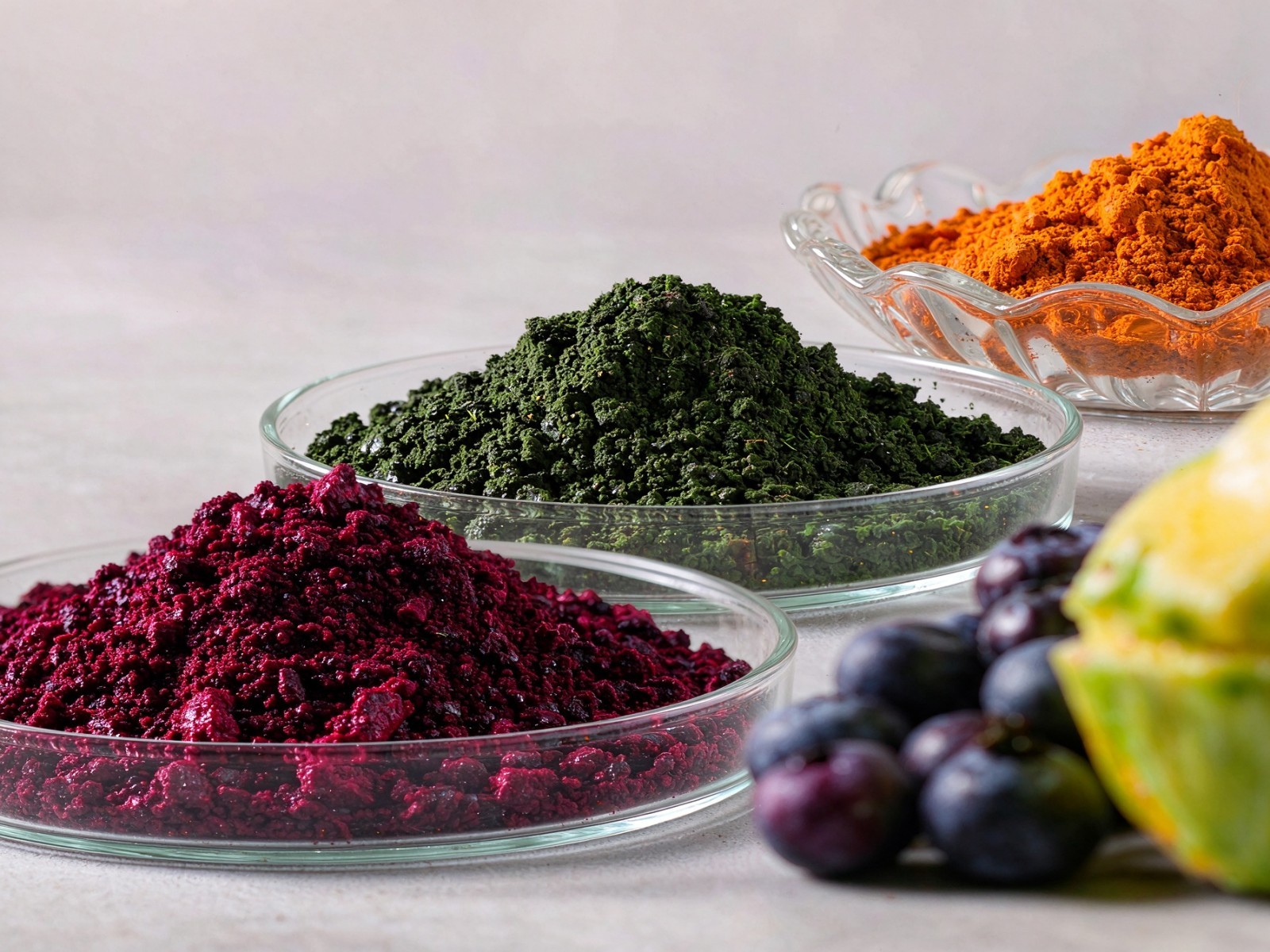
Spray-dried fruit powders are bought on specification, not on colour: carrier, marker assay, moisture and dispersibility decide how the powder behaves in your line.
Carrier. Maltodextrin (DE 10–15) or gum acacia must be declared by identity and level. Gum acacia disperses cleaner in cold water; maltodextrin is more economical but yields a hazier solution.
Standardisation. A named marker with its method (HPLC or UV) is what makes a figure real. An extract ratio such as "10:1" describes the process, not the potency.
Moisture. Loss on drying ≤5% is a typical ceiling, paired with water activity ≤0.60 at 25°C. For volatile-rich or oil-carrying powders, Karl Fischer titration is the accurate moisture method.
Solubility. For beverage applications, specify dispersibility and particle size (commonly ≥95% through 80 mesh); a powder that blends cleanly into a drink may behave very differently in a dry capsule blend.
Table 2 — Standardised extract vs whole fruit powder vs juice powder
Type
What it is
Best for
What to verify
Standardised extract
Concentrated, marker-assayed (HPLC), often on a carrier
Dose-specific actives (polyphenols, anthocyanins)
Marker %, method, carrier, assay basis
Whole fruit powder
Dried whole fruit, retains fibre and natural profile
Clean-label, "real fruit" positioning
Moisture & water activity, particle size, microbial load, origin
Chloride Magnesium Nutraceutical Wholesale and Mineral Salts
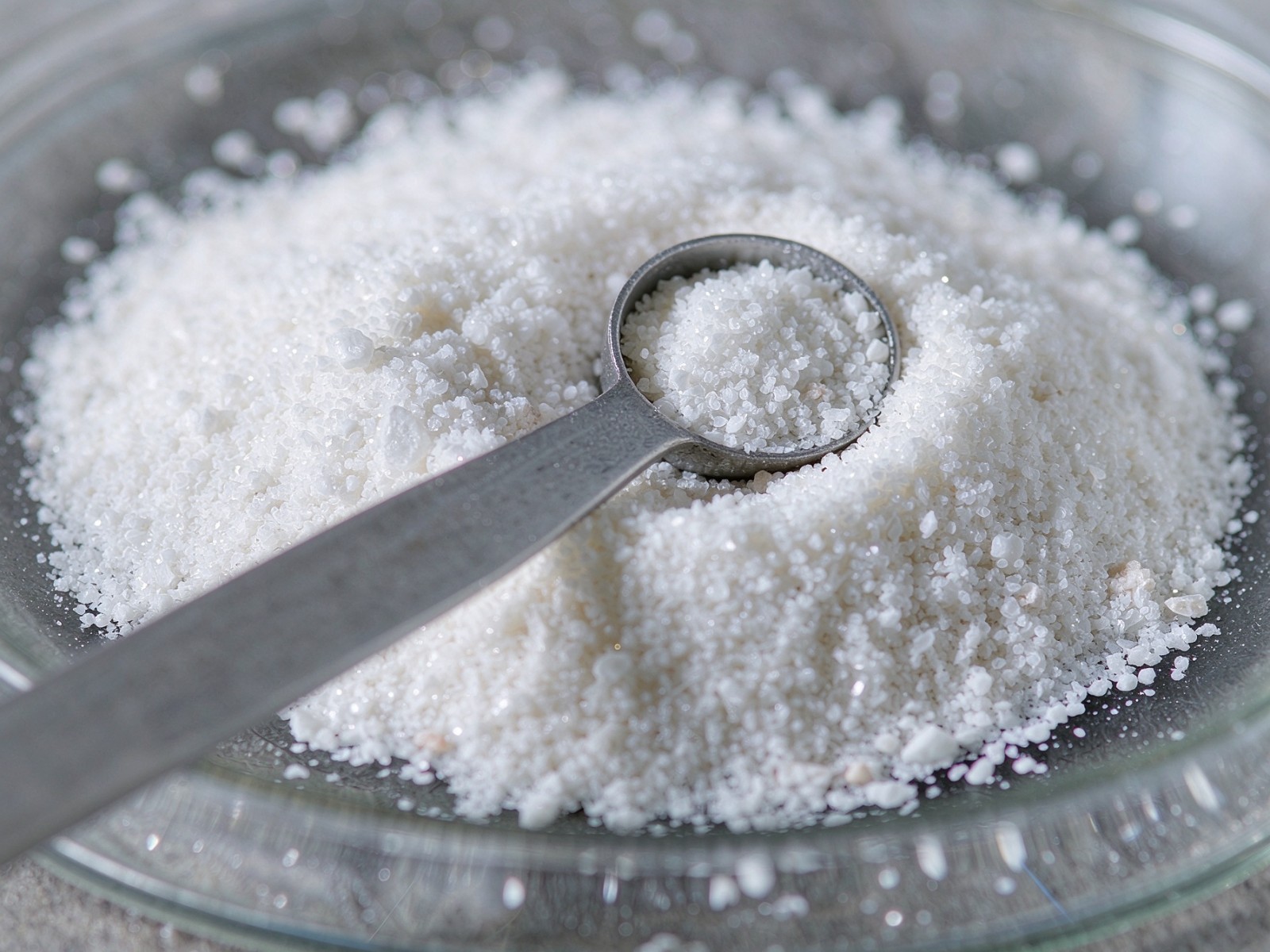
Mineral salts are bought on grade and on the salt's identity — and the two are not the same thing. "Food grade" is a purity statement, not a bioavailability statement. For a chloride magnesium nutraceutical wholesale purchase, the buyer must pin down the exact salt, the grade and the elemental-mineral content, because each determines both the label and the dose.
A mineral salt's grade and crystal form affect purity and handling — but its solubility is what drives how much of the mineral the body can actually absorb.
Solubility is what drives absorption. In the classic comparison by Firoz and Graber (2001), magnesium chloride, lactate and aspartate were better absorbed than magnesium oxide, and a more recent in-vitro study found magnesium chloride hexahydrate reached nearly 70% bioavailability — the highest of the magnesium compounds tested. Magnesium oxide, by contrast, carries about 60% elemental magnesium but is so poorly soluble that much of it passes through unabsorbed. The practical rule: match the salt to the claim, not to the cheapest quote.
Table 3 — Magnesium salt comparison (reference guide, not a uniform standard)
Salt
Approx. elemental Mg
Solubility & absorption
Typical use
Magnesium chloride
~12%
High solubility; better absorbed than oxide
Electrolyte balance, oral and topical
Magnesium citrate
~16%
High solubility; high absorption
Deficiency correction, digestion
Magnesium glycinate
~14%
High absorption; gentler on the stomach
Sleep, stress, sensitive digestion
Magnesium oxide
~60%
Low solubility; poor absorption
Short-term constipation relief
Elemental-magnesium percentages are approximate; absorption rankings reflect published bioavailability studies and are not a single universal standard. Always confirm grade, assay and origin in writing.
Wholesale Queen Garnet Fruit Powders for Nutraceuticals and Specialty Ingredients
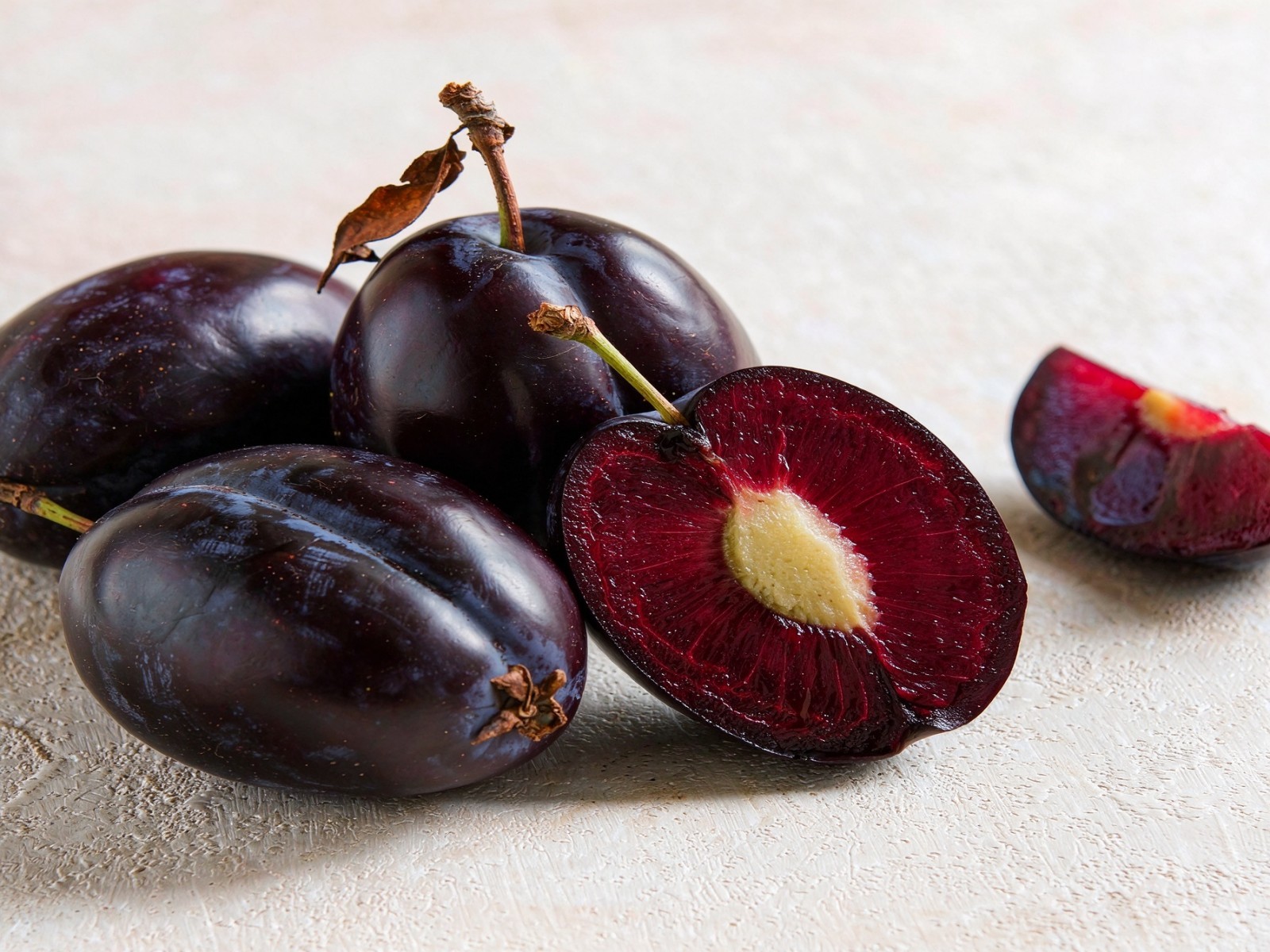
Single-origin and specialty ingredients command premium positioning — and demand the most paperwork. The Queen Garnet plum (Prunus salicina) is a useful case: a Japanese blood plum bred in a Queensland Government programme specifically for anthocyanin content, reaching up to 277 mg of anthocyanins per 100 g of fruit, with the skin contributing 36–66% of total anthocyanins (Fanning et al., 2013). A 400 mL serve of its juice delivers roughly 1,117 mg of anthocyanins (Netzel et al., 2012).
The Queen Garnet plum's anthocyanin content is its selling point — which is exactly why a "single origin" claim must be traceable to a specific orchard and harvest, not a colour.
That specificity is why wholesale queen garnet fruit powders for nutraceuticals cannot be verified by colour alone. A legitimate wholesale suppliers of queen garnet nutraceutical ingredients request should return a certificate of origin, a variety statement, lot-level traceability back to the grower and harvest, and an assay for the named anthocyanins (cyanidin-3-glucoside and cyanidin-3-rutinoside). If a supplier cannot connect the lot number to a specific orchard and harvest, treat the "single origin" claim as marketing.
Supplier Qualification Pack from FORNUTRA
FORNUTRA is a CDMO partner founded in 2009 with 6,000+ proven formulations, three manufacturing facilities spanning 30,000+ square metres, and 20+ production lines serving 5,000+ brands across 50+ countries. Its cGMP- and BRC-certified operations cover capsules, tablets, softgels, gummies, powders and stick packs, liquids, effervescent tablets, drops and jelly supplements, with FDA, EU and global regulatory support.
Every incoming raw material is qualified against identity, assay, contaminants and traceability before it is cleared for formulation.
For ingredient sourcing specifically, FORNUTRA works from the specification backward: every raw material is qualified against identity and assay, contamination panels, origin and lot traceability, and its fit to your finished-product claim — before formulation begins. If you are still weighing suppliers, ask for the qualification pack rather than a price list; it tells you far more about how the material will actually behave in production.
Whether you are sourcing a standardised fruit powder, a mineral salt or a single-origin botanical, the fastest way to de-risk the decision is to ask for the full qualification pack up front. Tell us your target ingredients and destination market, and our sourcing team will return specification templates, a testing checklist and a quotation with every parameter above documented in writing. Contact FORNUTRA to request your ingredient qualification pack.
Frequently Asked Questions
Do I need a new supplier audit per ingredient?
Generally, yes — or at least a material-specific documentation review. A fruit-powder supplier and a mineral-salt manufacturer carry different risk profiles (agronomy and microbial load versus heavy-metal and purity control), so one site visit does not validate the other material. Even with a shared manufacturer, require a specification, COA and contaminant panel specific to each ingredient, and re-verify whenever the origin or grade changes.
How are botanical contaminants screened?
A proper panel covers four families. Pesticides: a multi-residue screen (GC-MS/MS and LC-MS/MS) judged against the destination market's maximum residue limits. Heavy metals: lead, arsenic, cadmium and mercury, each with an individual ICP-MS limit. Microbiology: total plate count, yeast and mould, and absence of specified pathogens. Residual solvents: declared for solvent-extracted material. For high-value botanicals, add identity testing such as DNA barcoding or HPTLC to confirm the named species.
Key Takeaways
Qualify every supplier on four things: identity and assay, contamination panels, origin and lot traceability, and spec-to-claim fit.
Pin the assay basis (as-is vs dried / carrier-free) and the test method — they change what the number means.
Specify water activity (≤0.60 at 25°C) alongside moisture; they are different measurements.
Match the mineral salt to the claim: solubility drives absorption more than elemental content.
Verify single-origin claims with origin documents, variety statements and lot traceability.
Sources: Global Market Insights, Nutraceutical Ingredients Market Report (2025–2035); MarkWide Research, Global Fruit and Vegetable Powder Market (2026); New York State Attorney General, herbal supplement DNA investigation (2015); Newmaster SG, et al., "DNA barcoding detects contamination and substitution in North American herbal products," BMC Medicine (2013); Crawford C, et al., toxicological screening and DNA sequencing of herbal medicines and supplements, Journal of Pharmaceutical and Biomedical Analysis (2019); Firoz M, Graber M, "Bioavailability of US commercial magnesium preparations," Magnesium Research (2001); in-vitro magnesium bioavailability evaluation (PMC11901550); Fanning K, et al., "Increasing anthocyanin content in Queen Garnet plum," Acta Horticulturae (2013); Netzel M, et al., "Urinary excretion of antioxidants following Queen Garnet plum juice ingestion," Journal of Food Biochemistry (2012); fornutra.com (About, R&D and product pages). FORNUTRA capacity, certification and facility figures are stated on fornutra.com as of this writing and may change. Industry MOQ, price and lead-time figures are reference ranges, not uniform standards.
FORNUTRA® - A Leading CDMO Partner for Global Health Brands.
We support global health brands through rigorous formulation, transparent quality control, and agile manufacturing. Because every nutritional supplement we create embodies people's aspirations for a better life.






 Beauty from WithinSkin, hair, nails and body balance.
 General HealthDaily wellness across life stages.
 Fitness & SportsPerformance, hydration and recovery nutrition.
 Mental & EmotionalSleep, calm, mood and cognitive support.
 Lifestyle SolutionsWellness products built around everyday needs.