Lavine Liu
Product Compliance Manager | FORNUTRA
Experienced in supplement ingredients, product specifications, and sustainable sourcing practices.
Direct answer
Most sustainability claims on supplement labels are self-declared, not independently verified. Only a named certification — with a defined scope, a certificate number, and a live public listing — supports a public sustainability claim that survives scrutiny. Everything else is marketing. This guide shows brands how to tell certified sustainable nutraceutical products from greenwashing, and the documentation that satisfies retail and EU buyers.
Sustainability has moved from a brand-nice-to-have to a hard requirement inside the request-for-quote. Retail buyers and EU distributors now ask supplement brands for "sustainability evidence" before they will even open a costing sheet — and most of the claims brands hand back do not survive a compliance review. The reason is documented: a 2020 European Commission study found 53.3% of environmental claims across the EU were vague, misleading, or unfounded, and 40% were entirely unsubstantiated. If you are sourcing or selling certified sustainable nutraceutical products, the difference between a certificate you can point to and a slogan you cannot is the difference between winning the account and losing it.
The market makes this urgent rather than optional. The global nutraceuticals market reached roughly USD 636 billion in 2025 (Grand View Research) and is projected to approach USD 919 billion by 2030, with sustainability cited as a primary driver for plant-based, upcycled, and low-carbon formats. This guide explains which certifications actually exist, how to read a claim without being misled, and how GMP, FDA and NSF certifications fit alongside sustainability marks in your documentation stack.
53.3%of EU green claims vague or misleading (EC, 2020)
40%of EU green claims unsubstantiated (EC, 2020)
230+ecolabels active across the EU
$636Bglobal nutraceuticals market, 2025
Certified Sustainable Nutraceutical Products: What Certification Exists
The first mistake brands make is treating "sustainable" as a single, interchangeable label. It is not. Organic, fair trade, Rainforest Alliance, MSC, and FSC each certify a different thing, at a different point in the supply chain, with a different scope. A product that is certified organic is not automatically fair trade, and a bottle made from FSC-certified paper says nothing about the ingredients inside it. This is why a sustainability certification supplement claim only holds up when the certificate name, its scope, and its number all line up with the specific claim being printed on the pack.
For botanical and finished-good claims, the credible schemes are few and well-governed. Rainforest Alliance certification verifies that an ingredient is produced under its Sustainable Agriculture Standard — covering deforestation protection, biodiversity, and worker rights — but it does not require organic farming. Fair for Life and Fairtrade focus on fair pricing and labor conditions along the supply chain. MSC applies specifically to wild-caught marine ingredients such as fish oil. Where a brand wants to communicate its own manufacturing and sourcing footprint, rather than a third-party seal, that is a different conversation — see FORNUTRA's sustainability and social responsibility commitments for an example of how a manufacturer documents green manufacturing and ethical sourcing.
| Certification | What it actually covers | Scope of the claim | Evidence to request |
|---|
| USDA / EU Organic | Farming and ingredient production; prohibits synthetic pesticides and GMOs | Ingredient or finished product | Organic certificate number + scope + certifier |
| Rainforest Alliance | Sustainable agriculture: deforestation, biodiversity, worker rights | Ingredient / commodity | RA certificate + farm certification |
| Fair for Life / Fairtrade | Fair pricing, labor conditions, social criteria | Supply chain / product | Fair trade certificate + transaction record |
| MSC | Wild-caught, sustainable marine sources | Marine ingredient (e.g., fish oil) | MSC chain-of-custody number |
| FSC | Responsibly sourced paper and packaging | Packaging material | FSC certificate + chain-of-custody |
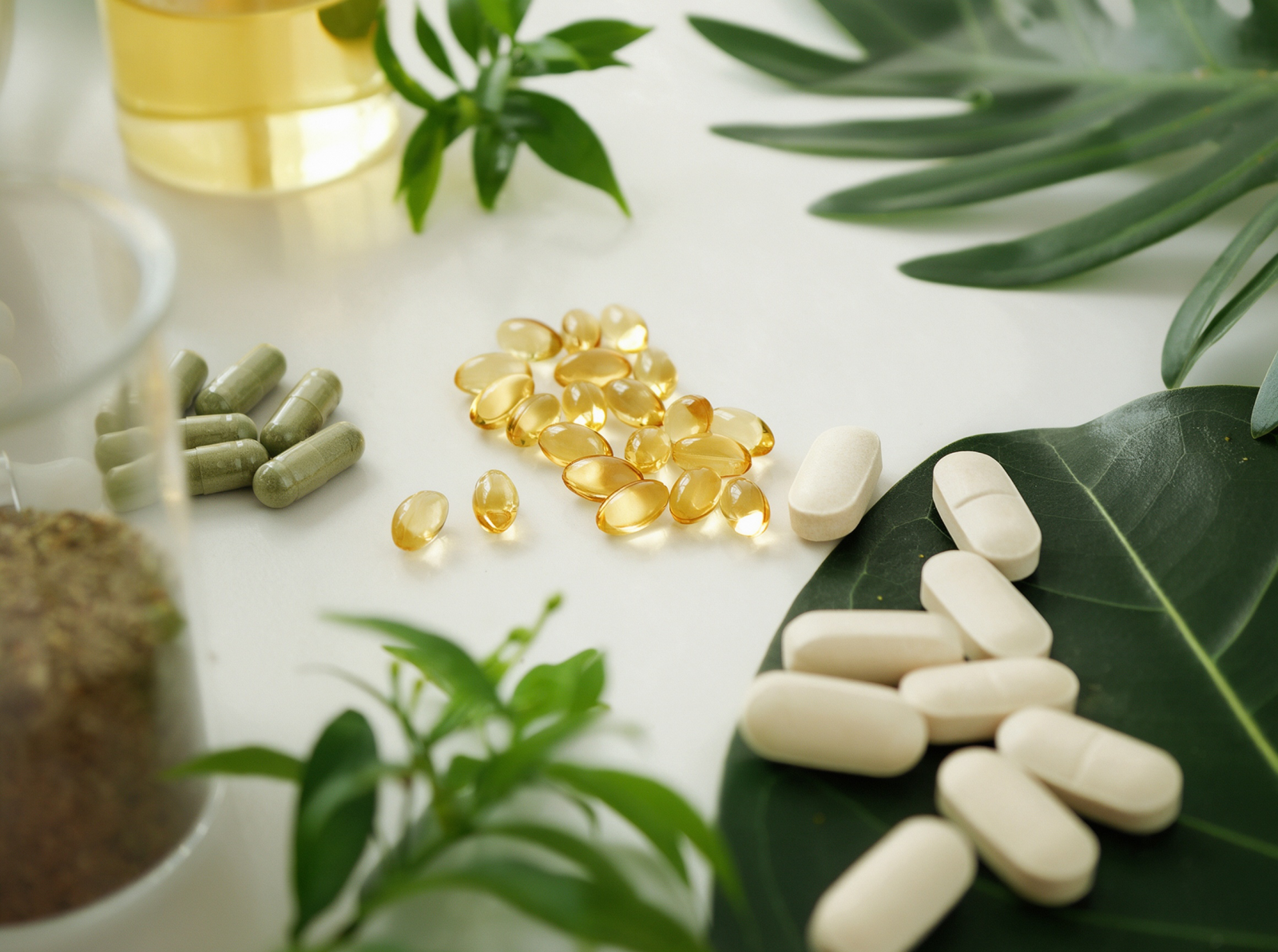
Organic, Rainforest Alliance, Fair for Life, MSC and FSC each certify a different part of the supply chain — no single seal covers "sustainable" as a whole.
Certified Eco-Sustainable Nutraceutical Products and Greenwashing Risk
The demand for certified eco-sustainable nutraceutical products has run ahead of the evidence behind them. A 2020 European Commission study of 150 environmental claims found 53.3% were vague, misleading, or unfounded, and 40% were unsubstantiated; a follow-up sweep of 344 claims by EU consumer authorities found that in 57.5% of cases the trader could not provide enough information to judge whether the claim was accurate. The EU has responded with the Green Claims Directive proposal (2023) and the directive empowering consumers for the green transition (adopted February 2024), which require voluntary environmental claims to be verified against recognized scientific evidence before they are communicated.
For a supplement brand, this means "eco-sustainable", "green", and "environmentally friendly" are no longer safe adjectives. A claim must specify what it covers — the ingredient, the product, or the company — and be backed by verifiable data. The fastest way to stay compliant is to anchor every public statement to a named scheme or a documented metric, and to drop anything you cannot prove. If the evidence exists only inside a marketing deck, treat it as a liability, not an asset.

An unverifiable "eco" claim is a liability — the EU now requires voluntary environmental claims to be substantiated with recognized evidence before they are communicated.
Certified Nutraceutical Products vs Self-Declared Sustainability
The core distinction is who stands behind the statement. A certified nutraceutical product carries an independent audit and a certificate you can look up; a self-declared claim carries only the brand's word. There is also a middle state — "certification in progress" — which is legitimate but must never be communicated as if the certificate already exists.
| Dimension | Self-declared | Third-party certified | Certification in progress |
|---|
| Who verifies | No one — brand's own claim | Independent auditor / certifier | Audit planned, not yet issued |
| Evidence | Marketing copy | Certificate number + public listing | Application / gap assessment |
| Can you print a logo? | No | Yes, within scope | No — not until awarded |
| Retail / EU acceptance | Weak — often challenged | Strong | Conditional |
| Risk if overstated | Greenwashing liability | Low | High if mislabeled as "certified" |
Sustainable Sourcing Audits for Botanical Ingredients
Botanicals are where sustainability claims most often break down, because the risk sits upstream at the farm or wild-harvest site, not in the factory. A proper sustainable sourcing audit verifies four things for each ingredient: identity and assay (is it the species claimed, at the right potency), contamination panels (pesticides, heavy metals, microbes), origin and lot traceability (where it was grown or harvested), and legal sourcing status (CITES listings, protected-area compliance). Without the last two, a "sustainably sourced" claim cannot be defended.
The risk is real and measurable. A widely cited DNA-barcoding study in BMC Medicine (Newmaster et al., 2013) found 59% of herbal products contained plant species not listed on the label, and over-harvesting pressures have pushed botanicals such as American ginseng and goldenseal onto "at-risk" lists. A manufacturer that can show supplier questionnaires, audit reports, and lot-level traceability for every botanical — rather than a single signed statement — is the one whose documentation will survive a retailer's review. If you are building a botanical-based line, our guide to botanical manufacturing walks through the sourcing decisions in detail. FORNUTRA runs this as standard practice: its R&D formulations process ties ingredient specifications directly to supplier qualification, and the same discipline applies whether you are sourcing a mainstream botanical or a niche one — the checks do not change.
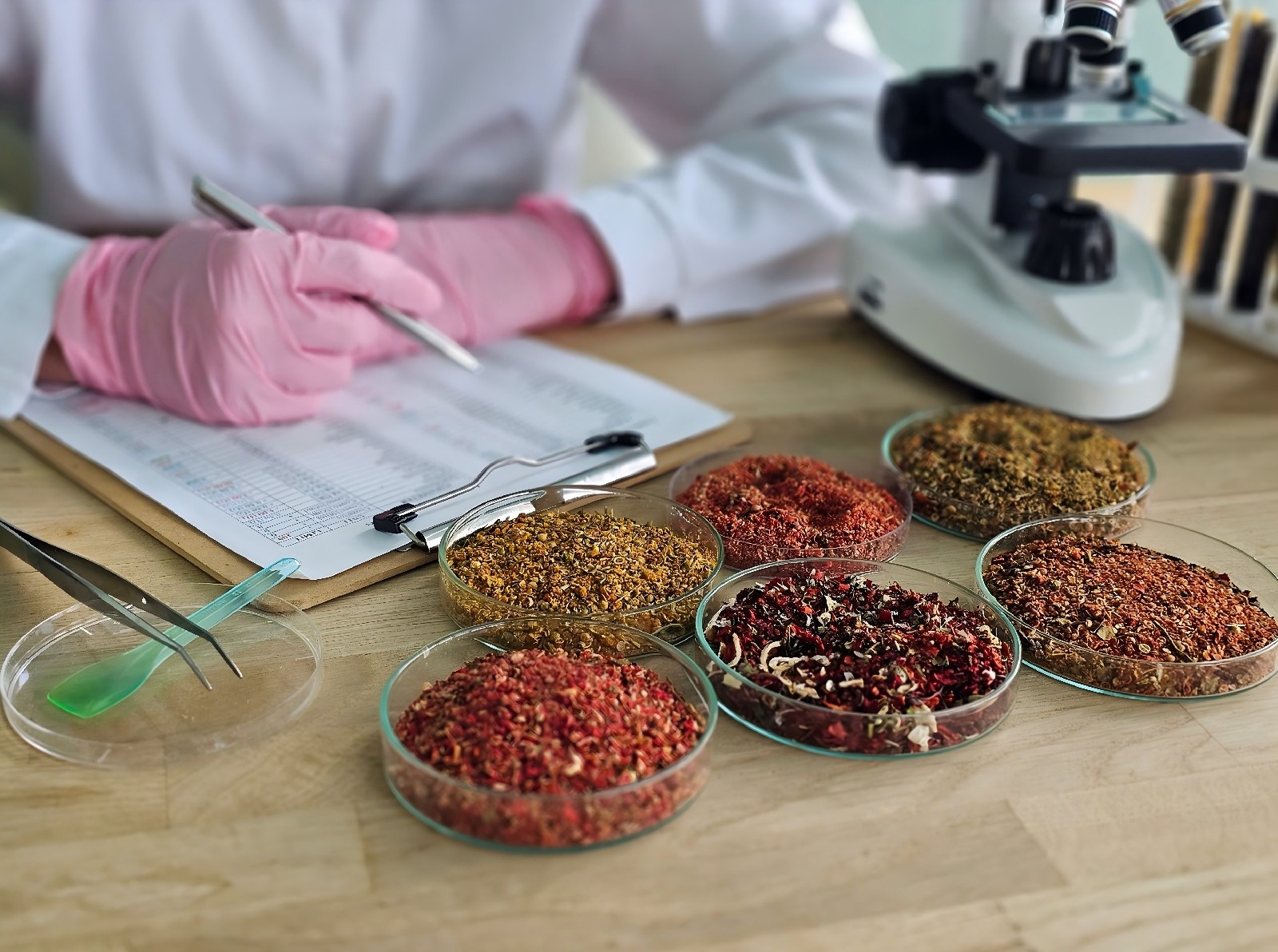
A sustainable sourcing audit checks identity, contaminants, origin and legal status — the same four checks apply to every botanical, not just flagship ingredients.
Packaging and Carbon Claims That Survive Scrutiny
Eco-friendly supplement packaging is one of the few sustainability areas where a brand can make a precise, verifiable claim — but only if it names the material and the evidence. A bottle made from 100% rPET, a carton from FSC-certified paper, or a pouch that is compostable to a recognized standard are defensible; "green packaging" written alone is not. For a deeper look at how packaging claims interact with label compliance, see our guide to supplement packaging design and label compliance.
Carbon claims deserve the most caution. The EU Green Claims Directive singles out "carbon neutral" and "CO2 compensated" statements as particularly prone to mislead, because they often rest on offset purchases rather than measured reductions. A defensible approach is to state the reduction against a measured baseline — for example, "20% less packaging plastic by 2030 against a 2020 baseline" — and to disclose how much of the claim comes from your own operations versus purchased offsets. Vague absolute terms such as "carbon neutral" without a defined boundary and a published methodology are the fastest route to a compliance finding.
FORNUTRA's Sourcing and Sustainability Documentation
FORNUTRA does not ask brands to take sustainability on faith — it provides the documentation that makes claims provable. Across its three manufacturing bases, the company operates a digital traceability system that links every extract to its legal, protected production area, and 90% of raw materials come from publicly listed or industry-leading suppliers that must pass FORNUTRA's ethical sourcing audit. In manufacturing, a closed-loop water system reduces production water waste by 80%, solar-assisted power is being rolled out at the Guangzhou and Zhengzhou bases, and the company supports brands in switching to 100% recyclable rPET, compostable bags, or plastic-reduction solutions.
This is the documentation stack a brand inherits when it manufactures with FORNUTRA: batch-level COAs, supplier audit records, ingredient traceability, and packaging material certificates — the raw material for a sustainability claim that can be audited rather than asserted. To see the full scope of these commitments, visit FORNUTRA's sustainability and social responsibility page, or explore the R&D formulations process to see how ingredient sourcing and specification are handled from the first sample.

Sustainability documentation — traceability, audits and material certificates — turns a sourcing claim into something a retailer can actually verify.
Need sustainability documentation that holds up?
Whether your retail buyer is asking for a sourcing audit, an organic or Rainforest Alliance pathway, or packaging material certificates, FORNUTRA can supply the documentation behind the claim — and manufacture the certified sustainable nutraceutical products your brand is promising. Explore our sustainability and social responsibility commitments, then contact our team to scope your product's sustainability and certification documentation.
Frequently Asked Questions
Can we say "sustainable" without certification?
You can, but only as a self-declared claim backed by documented evidence of what you actually measure — and it will carry far less weight, and far more risk, than a third-party certificate. Under EU rules, a voluntary environmental claim must be substantiated with verifiable evidence and communicated clearly. A named certification with a scope and certificate number is the strongest, cleanest way to support a public sustainability claim.
What does "carbon neutral" mean for a supplement?
It usually means the brand purchased offsets to balance the product's calculated emissions, rather than eliminating those emissions. Because the boundary and methodology are often unclear, "carbon neutral" is one of the claims the EU Green Claims Directive treats as especially prone to mislead. A defensible alternative is to state a measured reduction against a baseline and disclose what portion rests on offsets.
What is the difference between certified nutraceutical products and ingredient-only certification?
Ingredient-only certification means a single input, such as an organic botanical or MSC fish oil, is certified — not the finished supplement. A fully certified nutraceutical product means the finished good itself passed an independent product-level audit. These are different claims with different scopes, and the certificate should always state exactly which one applies.
What documentation do retailers and EU buyers ask for to prove sustainability?
Typically the certificate itself (with scope and number), a chain-of-custody or traceability record, supplier audit reports, batch-level COAs, and packaging material certificates. Retailers increasingly ask to see the supplier's sourcing policy and evidence of legal, protected sourcing — not just a statement of intent.
Do I need organic certification to market a supplement as "eco-friendly"?
No. Organic and "eco-friendly" are different claims. You can market a product as eco-friendly by substantiating a specific environmental attribute — recyclable or compostable packaging, reduced water or plastic use, or a named sustainable-sourcing standard — without organic certification. The key is that every specific claim is verifiable and scoped, rather than using "eco-friendly" as an undefined umbrella term.






 Beauty from WithinSkin, hair, nails and body balance.
 General HealthDaily wellness across life stages.
 Fitness & SportsPerformance, hydration and recovery nutrition.
 Mental & EmotionalSleep, calm, mood and cognitive support.
 Lifestyle SolutionsWellness products built around everyday needs.