




 Beauty from WithinSkin, hair, nails and body balance.
 General HealthDaily wellness across life stages.
 Fitness & SportsPerformance, hydration and recovery nutrition.
 Mental & EmotionalSleep, calm, mood and cognitive support.
 Lifestyle SolutionsWellness products built around everyday needs.


Nutraceutical Wholesale Supplier vs Broker: How the Chain Works
Direct answer A nutraceutical wholesale supplier takes legal title to the goods; a broker only introduces buyer and seller; a manufacturer owns the batch record. Each answers a different question — and knowing which party you are actually talking to determines who answers for quality, traceability, and liability if a batch fails. Table of Contents Send the same finished-supplement specification to three suppliers and you can get three very different prices — and three very different answers when a batch fails. The reason is rarely the product. It is the position each seller occupies in the chain: one owns the goods, one only makes introductions, and one owns the production record. If you buy wholesale nutraceuticals without first identifying which of the three you are dealing with, you are pricing a product while blind to who is actually accountable for it. The stakes are large and growing. The global nutraceuticals market reached about USD 636.2 billion in 2025 and is projected to grow to USD 1,151.5 billion by 2033 at a 7.7% CAGR (Grand View Research), with dietary supplements alone approaching USD 209.5 billion in 2025. Every link you add between factory and brand is a link that adds margin, adds lead time, and — more importantly — adds ambiguity over who stands behind quality. Three terms get used almost interchangeably in the trade, but they are legally distinct, and each signs a different kind of contract. Knowing which one is on the other side of the table is the single most useful thing you can do before comparing a single price. Here is the practical difference that matters most: a nutraceutical wholesale supplier can be held to the condition of the goods it resells, while a broker usually cannot, because the broker never owned them. When three parties quote you the same SKU, that difference — title and custody — is what explains the price gap. The same logic holds across dosage forms. If your program covers multiple formats, a liquid supplement manufacturer quoting ex-factory is a different counterparty than a reseller offering the same liquid SKU from a bonded warehouse. For a worked example in one specific category, see our guide to vitamin wholesalers. Quality in supplements is proven by documents, not by promises. The most important of those documents is the batch record — the record that links a finished lot to the exact ingredients, equipment, in-process checks, and release decisions behind it. Ask any counterparty one question before you commit: “Can you show me the batch record for the lot I am about to buy?” The answer immediately tells you which of the three roles you are dealing with. This is not academic caution. Under 21 CFR Part 111, U.S. dietary supplement manufacturers must establish product specifications and keep complete batch production records — and the FDA's own inspections show how often that obligation is missed. In fiscal year 2025, the FDA inspected 800 dietary supplement facilities and cited 49.1% for cGMP noncompliance; for sites outside the United States, the rate was 72.5% (ConsumerLab, obtained under FOIA). The most frequent failures are exactly the controls a buyer needs: missing product specifications, missing written QC procedures, and incomplete batch records. Wholesale nutraceutical stock sits in a warehouse, not a lab. That makes four traceability questions worth asking before you buy wholesale nutraceuticals from any reseller: Temperature-controlled formats raise the bar again. Probiotics, certain liquids, and some softgels degrade under the wrong storage conditions, and a wholesaler's warehouse is only as good as its temperature-mapping and monitoring records. A broker who never touches the goods cannot answer these questions at all — which is precisely the risk that gets hidden when a buyer assumes “the supplier” is one coherent entity. If you want a step-by-step way to pressure-test any counterparty, see how to choose a health supplement manufacturer. In nutraceuticals wholesale, price is a stack, not a number. Each party in the chain adds a margin, and the final landed price is the sum of every layer between the factory and your dock. Margin expectations vary by region, category, and volume, so treat these as industry reference ranges rather than fixed rules. Finished-goods and ingredient distributors commonly add 15% to 25% per layer, and a multi-tier chain can push landed cost two to three times above a comparable direct, ex-factory quote. Raw materials typically represent 40% to 60% of a supplement's cost of goods sold, which is why every unnecessary intermediary shows up so clearly on the P&L. For nutraceuticals for wholesalers, the economics run on turnover, not on a single order. A reseller holding stock trades margin for speed: you pay more per unit, but you get shorter lead times and lower minimums. A manufacturer sells ex-factory at a lower unit price, but usually expects larger volumes and longer lead times. The right choice depends on where your brand is: The comparison should always be landed cost per unit at your actual volume — including freight, testing, and storage — never the headline ex-factory number. If your line is powder-based, compare the landed price from a powder supplement manufacturer against a distributor's stock price on the same specification before you assume “wholesale” means cheaper. For a structured method of evaluating either route, see our guide to finding a reliable supplement contract manufacturer. Every intermediary you remove is a link that cannot blur accountability. FORNUTRA operates as a manufacturer — not a broker — which means the batch record, the COA, and the retained sample stay with the party that actually made the product. FORNUTRA supports brands across gummies, hard capsules, softgels, tablets, powders, and liquid supplements, with in-house identity testing, potency analysis, heavy-metal screening, and microbiological examination — backed by ISO 17025-accredited partners for specialized assays. Products manufactured at our facility ship to markets across North America, Europe, Southeast Asia, and the Middle East. Because we own production, we can speak to a batch's history directly rather than forwarding someone else's paperwork and hoping it is right. If you are currently buying wholesale nutraceuticals through a reseller and cannot get straight answers on the batch record, that is the signal to consolidate toward a single source that owns the entire chain. Whether you are comparing three quotes today or planning a full private-label program, the fastest way to remove supply-chain ambiguity is to deal with the party that owns production. If you want an ex-factory quote you can stand behind — with the batch record, COA, and retained sample all in one place — contact our team and tell us your specification. We will show you the chain end to end. A broker can forward a COA it received from the actual supplier, but it cannot independently issue one — a certificate of analysis must be generated by the party that tested or released the lot. If a broker's COA lacks the manufacturer's name, a lot number, and a real test date, treat it as unverified. Always ask who performed the testing and whether the document is lot-specific. Liability follows title and control. A manufacturer is liable for defects in production; a wholesale supplier that takes title is liable for what it resells; a broker that never takes title typically carries no liability for product quality and will point you to the buyer–seller contract. That is why your purchase agreement should name the responsible party explicitly before any money moves. Not always. Direct manufacturing usually offers a lower unit price but higher minimum order quantities and longer lead times, while a wholesale supplier offers speed and flexibility at a higher unit cost. Compare on landed cost per unit at your actual volume — including freight, testing, and storage — not on the headline ex-factory number. Ask for three documents: the lot-specific COA, the batch production record (or written confirmation that the factory will release it), and the storage-condition records for the stock you are buying. A genuine wholesale supplier can point to the factory behind the goods; a hidden reseller can only point to another reseller. If the answer is vague, you are almost certainly adding a margin without adding accountability.Nutraceutical Wholesale Supplier, Broker or Manufacturer?
Supplier vs Broker vs Manufacturer: The Responsibility Matrix
Dimension Manufacturer Wholesale Supplier Broker Title to goods Owns Owns Does not own Batch record Holds master + batch records Holds only what it buys None COA Issues the original Forwards or issues its own Forwards only (if at all) Storage & custody Factory stock Warehouse stock No custody Quality liability Direct Reseller liability Limited or excluded Price basis Ex-factory Landed + margin Commission or spread Typical role OEM/ODM production Stock & distribution Matchmaking 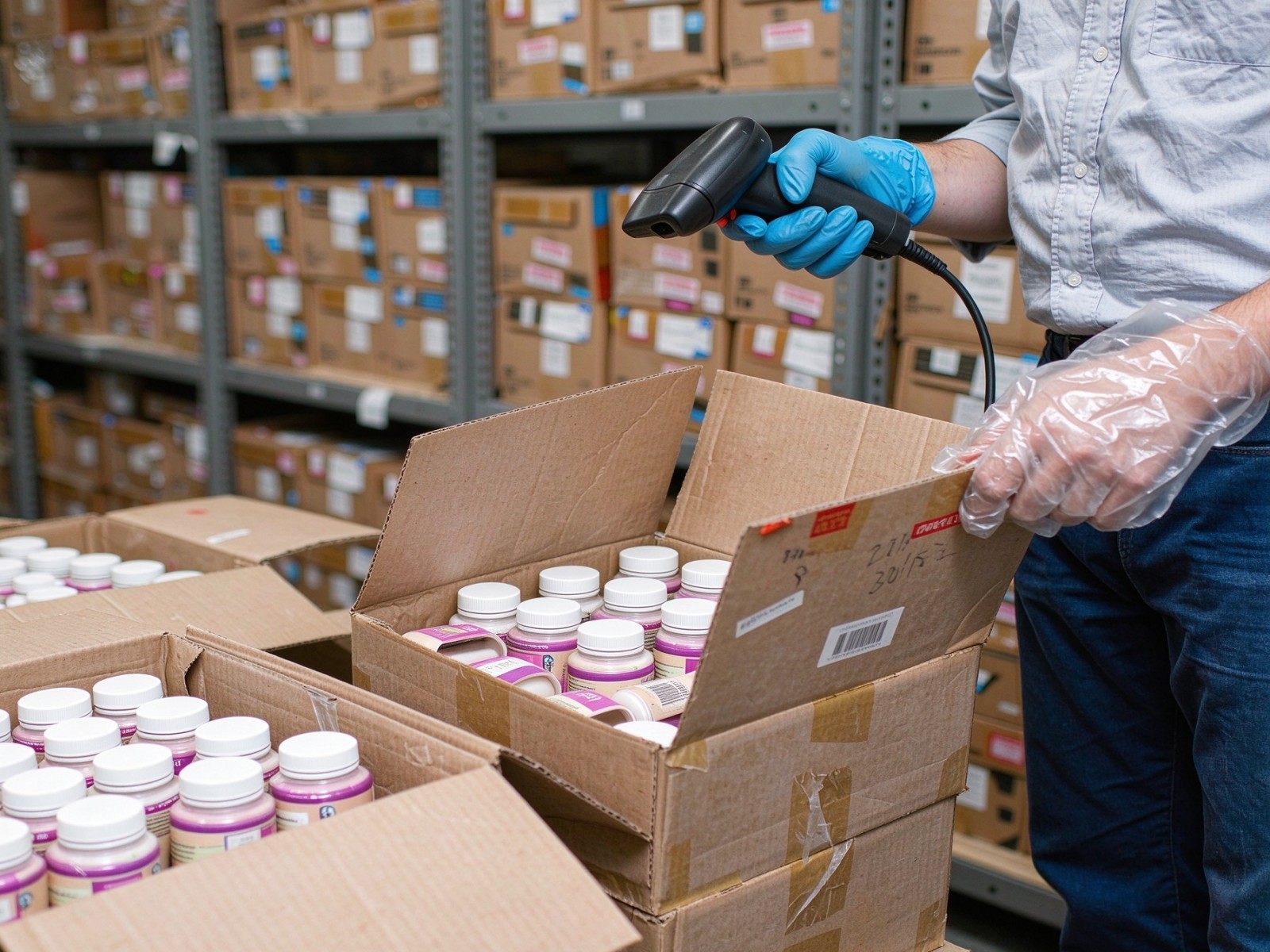
Nutraceutical Wholesale: Who Owns the Batch Record
Wholesaler Nutraceuticals, Wholesale Nutraceutical Stock and Traceability Questions

Nutraceuticals Wholesale Pricing Models Explained
Nutraceuticals for Wholesalers: Margin and Turnover Maths

Use FORNUTRA as a Single-Source Supply Partner
Frequently Asked Questions
Can a broker provide a COA?
Who is liable if a batch fails?
Does buying direct from a manufacturer always cost less?
How can I tell a genuine wholesale supplier from a hidden reseller?