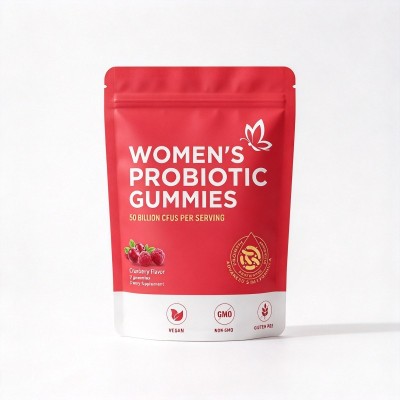
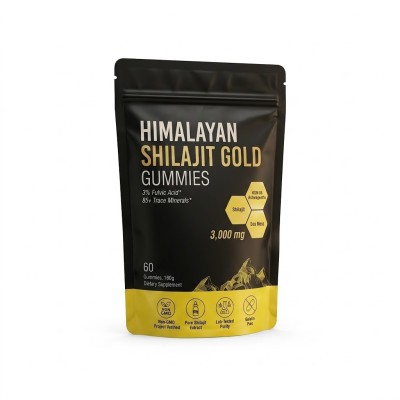
The global sports nutrition market continues to expand as consumers become more informed about ingredients, production methods, and quality standards. For brand owners, importers, and distributors, understanding the sports supplement manufacturing landscape is no longer optional — it is a competitive necessity. This guide examines the trends, production standards, formulation challenges, and partner selection criteria that shape successful sports nutrition brands.
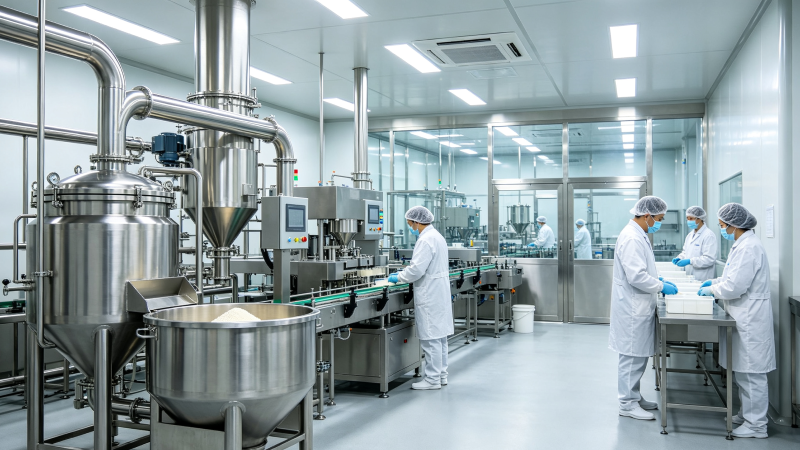
Modern supplement manufacturing requires advanced equipment, rigorous quality systems, and experienced technical teams.
Global Sports Nutrition Market Trends Driving Supplement Manufacturing Demand
The sports nutrition manufacturing industry is being reshaped by clean-label demand, plant-based innovation, personalized nutrition, and an expanding consumer base that now reaches far beyond elite athletes.
Industry reports indicate that sports nutrition has evolved far beyond its bodybuilding origins. Today, the category encompasses a broad range of consumers — from elite athletes to weekend fitness enthusiasts and everyday health-conscious individuals. This diversification has created sustained demand across multiple product segments and formulation types, driving growth across contract supplement manufacturing worldwide.
Clean-label formulations have moved from niche to mainstream, with brands increasingly specifying natural sweeteners, plant-based protein sources, and transparent ingredient lists. Personalized nutrition is driving demand for smaller batch sizes with greater formulation flexibility — enabling products targeting specific segments from endurance athletes to active aging consumers. Hydration and recovery supplements, spanning protein blends and amino acid formulations, remain among the largest and most consistent categories in sports nutrition manufacturing.
Protein Powders, BCAA, Pre-Workout and Recovery Supplements
Protein powders remain the cornerstone of sports nutrition manufacturing. Whey proteins dominate production volumes, but plant-based alternatives — including pea, rice, and soy blends — are capturing an increasing share of formulation requests from protein supplement manufacturers. BCAA and amino acid supplements maintain strong market positions, with brands seeking precise ratio control and consistent batch quality. Pre-workout supplements represent the most technically demanding category, where the combination of stimulants, performance ingredients, and flavor systems requires sophisticated formulation expertise.
Key Market Drivers for Sports Nutrition Manufacturing
- Consumer shift toward clean-label and transparent ingredient declarations
- Rapid growth in plant-based protein and vegan sports nutrition formulations
- Demand for personalized nutrition and smaller, more flexible production batches
- Expansion of recovery and hydration categories beyond traditional sports consumers
- Increasing preference for convenient dosage forms including gummies and ready-to-drink formats
In summary, sports nutrition manufacturing demand is driven by an increasingly diverse consumer base, the mainstreaming of plant-based and clean-label products, and growing demand for production flexibility.
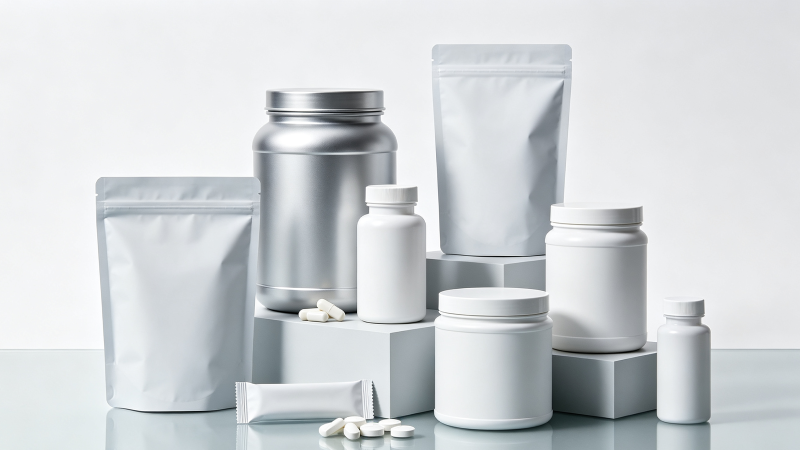
The sports nutrition market spans diverse categories including protein powders, pre-workouts, amino acids, and recovery formulations.
Production Standards for Sports Nutrition Supplement Manufacturers
Quality sports supplement manufacturing depends on a layered system of standards — GMP for facility controls, ISO for management systems, HACCP for process safety, and third-party testing for product verification — all working together to ensure consistent, safe, and accurately labeled products.
Quality in sports supplement manufacturing begins with raw material sourcing and supplier qualification. Leading manufacturers implement rigorous approval processes that assess ingredient specifications, supply chain transparency, and documentation standards — systems that modern manufacturing facilities integrate at every stage of operation.
Raw Material Purity, Third-Party Testing and NSF Sport Certification
Ingredient traceability is a defining quality factor. Manufacturers that maintain detailed records of raw material origins, supplier certifications, and chain-of-custody documentation give brand partners confidence in label claims and regulatory compliance. Systematic heavy metal screening and microbiological testing — covering identity, potency, pathogens, and contaminants — ensure product safety throughout shelf life.
NSF Certified for Sport is a widely recognized program verifying product contents against label claims and screening for more than 270 banned substances. While not every facility holds this certification, its requirements inform best practices across the industry and help brands evaluate quality system rigor.
Core Quality Assurance Components
- Raw material identity, purity, and potency verification upon receipt
- In-process testing during blending to verify uniform active ingredient distribution
- Finished product testing: heavy metals, microbiological, potency, and contaminant screening
- Accelerated and real-time stability testing to validate shelf-life claims
- Comprehensive batch records and certificates of analysis for full traceability
| Certification Standard | Primary Focus | Scope | Verification Method |
|---|
| GMP | Production quality and consistency | Facility, personnel, processes, documentation | Regulatory authority audit |
| ISO 9001 | Quality management system | Organization-wide quality processes | Third-party certification audit |
| ISO 22000 | Food safety management | Entire supply chain and production | Third-party certification audit |
| HACCP | Hazard analysis and process control | Production process critical control points | Internal monitoring plus external verification |
| NSF Certified for Sport | Product purity and banned substance screening | Finished product testing and facility audit | Independent laboratory testing and facility inspection |
Sports Supplement Manufacturing Process Flow
1
Raw Material Sourcing & Supplier Qualification
Ingredient suppliers are vetted through documentation review, audit programs, and material specification verification before qualification.
2
Incoming Material Testing
Each raw material lot undergoes identity testing, potency analysis, heavy metal screening, and microbiological examination before release for production.
3
Formulation Weighing & Blending
Ingredients are precisely weighed according to the master formula and blended in validated equipment to achieve uniform distribution of all active compounds.
4
In-Process Quality Control
Samples are collected from multiple points in the blend for potency verification, blend uniformity testing, and physical characteristic checks.
5
Filling, Capping & Packaging
Finished blend is filled into containers — tubs, pouches, stick packs, or bottles — with seal integrity verification and label application.
6
Finished Product Testing & Release
Final laboratory analysis confirms potency, purity, and safety parameters. Quality assurance reviews batch records before authorizing product release.
In summary, a robust quality framework combining GMP, ISO, HACCP, and third-party testing — executed across a disciplined manufacturing process — provides the foundation for consistent, safe sports supplements.

Third-party laboratory testing and rigorous quality control protocols are essential components of supplement manufacturing.
Pre-Workout Supplement Manufacturing: Key Formulation Considerations
Pre-workout manufacturing demands specialized expertise in ingredient compatibility, hygroscopicity control, flavor masking, and precision dosing — challenges that separate experienced
powder supplement manufacturers from general contract producers.
Pre-workout supplements present unique manufacturing challenges. The combination of multiple active ingredients — each with distinct physical and chemical properties — requires specialized formulation knowledge. Hygroscopic compounds that absorb moisture can cause clumping and inconsistent dosing, while many active ingredients carry strong or unpleasant taste profiles that demand sophisticated flavor-masking systems. R&D and formula development capabilities are critical for overcoming these challenges.
Caffeine, Beta-Alanine and Creatine — Ingredient Synergy
Caffeine is one of the most common pre-workout ingredients and one of the most critical to dose accurately — variations between batches can significantly affect user experience. Beta-alanine is highly water-soluble and generally compatible with other ingredients, but its characteristic tingling sensation means dosing precision directly influences consumer experience. Creatine monohydrate, valued for its stability, can present solubility challenges and may settle during storage if particle sizes are not carefully controlled.
Pre-Workout Formulation Considerations
- Hygroscopicity control: selecting ingredients and anti-caking agents for moisture-sensitive formulations
- Flavor masking: developing systems that neutralize bitter, metallic, and sour ingredient notes
- Particle size distribution: ensuring uniform blending and preventing ingredient segregation
- Stability under varied storage conditions: validating potency retention through the product shelf life
- Packaging compatibility: selecting moisture-barrier materials and appropriate desiccant systems
In summary, pre-workout manufacturing requires precision in ingredient compatibility, dosing accuracy, flavor development, and stability validation. Manufacturers with dedicated pre-workout expertise deliver products that perform consistently across every production run.

Pre-workout formulations require precise ingredient handling to ensure product quality and consistency for end users.
Post-Workout Recovery Supplement Production
Recovery supplement manufacturing spans multiple product formats and ingredient categories, each requiring distinct production approaches — from protein blend processing to amino acid ratio control and electrolyte formulation stability.
Recovery supplements represent one of the broadest categories in sports nutrition manufacturing, encompassing protein powders, amino acid blends, electrolyte formulations, and specialized recovery compounds — each with distinct production requirements.
Protein-based formulations demand careful attention to source quality, flavor compatibility, and mixability. Instantized proteins with improved dispersibility are commonly specified for ready-to-mix products. BCAA and EAA blends require precise ratio control, with brands increasingly specifying custom amino acid profiles rather than standard ratios. Electrolyte formulations have evolved beyond simple sodium-potassium blends to include magnesium, calcium, zinc, and trace minerals — the mineral source selected affects solubility, taste, and formulation characteristics. Collagen peptides, now significant in joint-support recovery products, require controlled temperature environments during blending to prevent denaturation.
Recovery Supplement Production Requirements by Category
- Protein Powders — instantizing, flavor compatibility, mixability, and controlled-humidity packaging
- Amino Acid Blends — precise ratio control, particle uniformity, and taste-masking systems
- Electrolytes — mineral source selection, solubility optimization, and hygroscopicity management
- Collagen Formulations — temperature-controlled processing and specialized blending parameters
In summary, recovery supplement production rewards manufacturers with broad ingredient expertise, flexible production capabilities, and the quality systems to deliver consistent results across multiple formulation types.
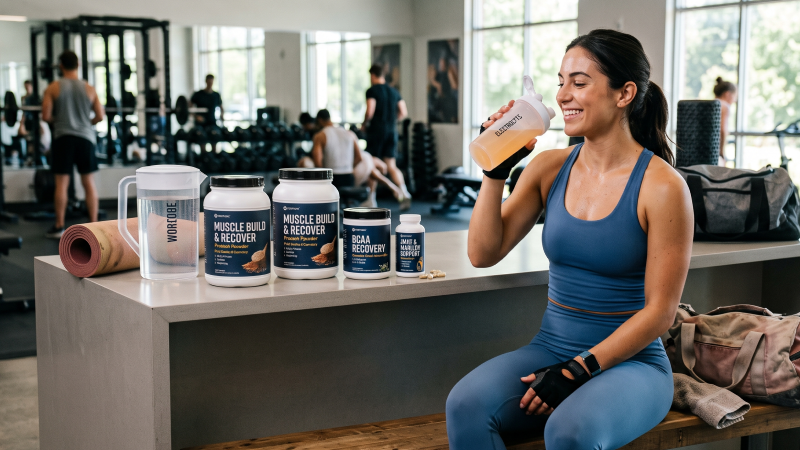
Post-workout recovery products support a wide range of consumer needs, from muscle recovery to hydration and joint support.
How Sports Supplement Manufacturers Support Brand Launches
Sports supplement manufacturers support brand launches through three primary service models — OEM, ODM, and private label — each offering different levels of customization, development timelines, and investment requirements to match brands at every stage of growth.
Launching a sports nutrition brand requires a comprehensive manufacturing partner. OEM services allow brands to bring proprietary formulations to production — ideal for established companies with in-house R&D who need scaled capacity from a contract supplement manufacturer. ODM offers ready-to-market formulations from the manufacturer's library, dramatically reducing time-to-market and upfront investment. Private label manufacturing provides pre-formulated, market-validated products at lower MOQs — an accessible entry point for new market entrants.
| Feature | OEM | ODM | Private Label |
|---|
| Formula Ownership | Brand-owned proprietary formula | Manufacturer-developed, brand-adapted | Pre-formulated, market-ready |
| Customization Level | Full — any ingredient, dosage, flavor | Moderate — flavor, packaging, minor adjustments | Limited — label and packaging only |
| Development Timeline | 8–16 weeks | 4–8 weeks | 2–4 weeks |
| Typical MOQ | Higher — suited for scaled production | Moderate — balances flexibility and volume | Lower — accessible for market testing |
| Best For | Established brands with unique formulations | Scaling brands seeking speed-to-market | Startups and new category entry |
| R&D Investment | Higher — full formulation development | Lower — leveraging existing formulations | Minimal — ready-to-market products |
Beyond the core manufacturing models, full-service partners provide R&D and formula development, in-house flavor customization, packaging design, and label compliance support — including guidance through FDA and international regulatory requirements. Export documentation, certificates of analysis, and logistics coordination distinguish manufacturers equipped to support international brand growth from those focused solely on domestic production.
Brand Partnership Journey: From Concept to Commercial Launch
1
Initial Consultation & Product Brief
Brand shares product concept, target market, dosage form preference, and commercial objectives. Manufacturer assesses feasibility and proposes development pathway.
2
Formulation Development & Prototyping
R&D team develops prototype formulations addressing ingredient compatibility, sensory characteristics, and stability requirements. Initial lab-scale samples are produced.
3
Sample Review & Formula Refinement
Brand evaluates prototypes for taste, texture, appearance, and functional characteristics. Iterative adjustments refine the formula to meet brand specifications.
4
Production Planning & Material Sourcing
Final formula is approved. Raw materials are procured from qualified suppliers. Production schedule, packaging specifications, and label artwork are finalized.
5
Commercial Manufacturing
Full-scale production batch is manufactured following validated procedures, with in-process quality checks at every critical stage.
6
Quality Testing & Documentation
Finished product testing verifies potency, purity, and safety. Certificates of analysis and batch records are prepared for brand documentation and regulatory compliance.
7
Packaging, Labeling & Logistics
Product is packaged, labeled, and prepared for shipment. Export documentation is arranged for international deliveries.
8
Ongoing Production & Quality Monitoring
Subsequent batches maintain the same specifications. Stability programs and continuous quality monitoring support long-term product success.
In summary, whether OEM, ODM, or private label, the right manufacturing partner provides end-to-end support — from formulation to logistics — enabling faster, lower-risk market entry.
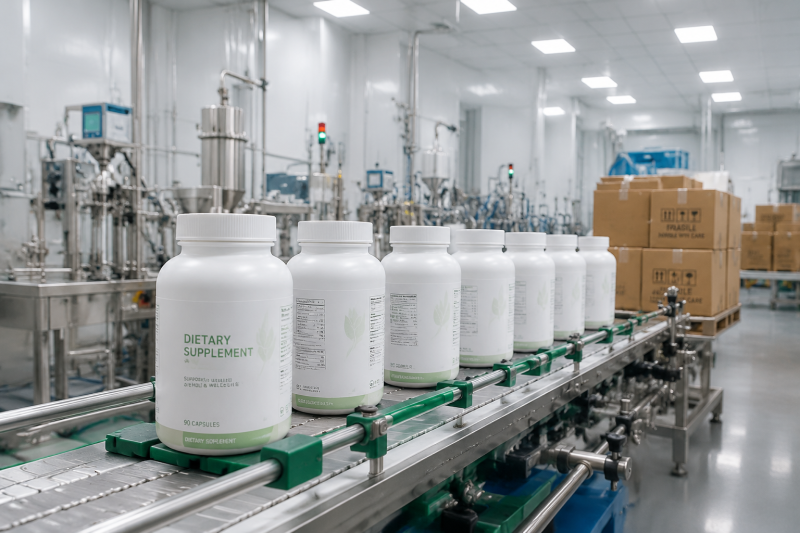
Full-service manufacturers support brands through every stage — from formulation development to packaging, labeling, and logistics.
What Leading Sports Nutrition Brands Look for in a Manufacturing Partner
Leading sports nutrition brands evaluate manufacturers across seven critical dimensions: category-specific experience, certifications, product consistency, scalability, R&D capability, supply chain reliability, and communication quality.
While every brand has unique requirements, certain criteria consistently emerge as priorities when evaluating sports supplement manufacturers. Category-specific experience ranks among the most important factors — a protein powder specialist brings different expertise than a gummy or capsule producer. Certifications including GMP, ISO, and HACCP provide objective evidence of manufacturing capability.
Seven Criteria for Evaluating a Sports Supplement Manufacturing Partner
- Category-Specific Experience — proven track record in the exact product type and dosage form
- Certifications & Quality Systems — GMP, ISO, HACCP, and market-relevant third-party certifications
- Product Consistency — batch-to-batch uniformity in taste, texture, mixability, and potency
- Scalable Production — quality maintained from pilot batches to full commercial-scale runs
- R&D Capability — proactive formulation suggestions, ingredient sourcing options, and technical problem-solving
- Supply Chain Reliability — robust raw material sourcing, inventory management, and consistent production scheduling
- Communication Efficiency — transparent timelines, proactive issue resolution, and responsive account management
Product consistency across batches is the ultimate test of a manufacturing partnership — it reflects disciplined process control, validated procedures, and committed quality culture. Manufacturers with established reputations earn long-term brand loyalty through consistent delivery. Scalable production capability is equally essential: a manufacturer performing well at 500 units but unable to maintain quality at 50,000 units creates a growth bottleneck. R&D capability differentiates transactional manufacturers from true development partners who contribute to product innovation rather than simply executing orders.
In summary, the most effective manufacturing partnerships emerge when brands evaluate potential partners holistically — considering technical capabilities, quality culture, communication style, and long-term alignment with brand growth goals.
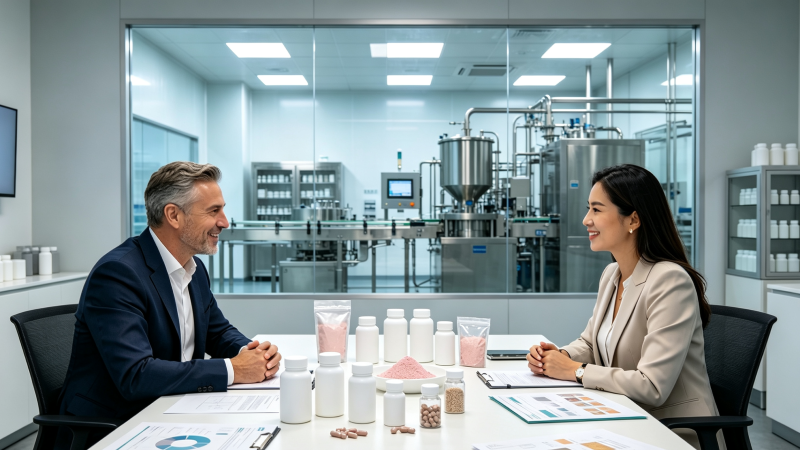
Leading brands evaluate manufacturing partners on certifications, consistency, scalability, R&D capability, and communication.
FORNUTRA's Sports Nutrition Supplement Manufacturing Services
FORNUTRA provides end-to-end sports nutrition manufacturing across powder, capsule, tablet, and gummy formats — combining OEM and ODM flexibility with comprehensive quality systems and international export capability to support brands at every stage of growth.
FORNUTRA provides comprehensive sports nutrition supplement manufacturing across powder, capsule, tablet, and gummy formats. OEM services replicate proprietary formulations with batch-to-batch consistency, while ODM solutions leverage FORNUTRA's existing formulation library for faster speed-to-market. Powder manufacturing encompasses protein powders, pre-workout formulations, amino acid blends, recovery supplements, and functional beverage powders. Capsule manufacturing and gummy supplement production provide additional format options for diverse consumer preferences.
| Dosage Form | Best Suited For | Shelf Stability | Production Complexity | Consumer Appeal |
|---|
| Powder | Protein, pre-workout, recovery blends, greens | Good — moisture-sensitive | Moderate | Excellent — traditional sports format |
| Capsule | Amino acids, botanicals, single-ingredient supplements | Excellent — protected from moisture | Moderate | Good — convenient, precise dosing |
| Tablet | Multivitamins, minerals, effervescent formulas | Excellent — dense, stable matrix | Higher — requires tooling | Good — familiar, shelf-stable |
| Gummy | General wellness, active nutrition, lifestyle supplements | Moderate — temperature-sensitive | Higher — specialized production line | Excellent — enjoyable, growing rapidly |
FORNUTRA's R&D and formula development team works collaboratively with brand partners on custom formulations. Packaging customization spans container types, label design, and formats optimized for different retail channels. International export support, rigorous quality management systems, and flexible production quantities accommodate brands at every growth stage — from initial market testing to large-scale multi-market distribution.
In summary, FORNUTRA combines multi-format manufacturing capability, OEM/ODM flexibility, rigorous quality systems, and international export support for brands at every growth stage.
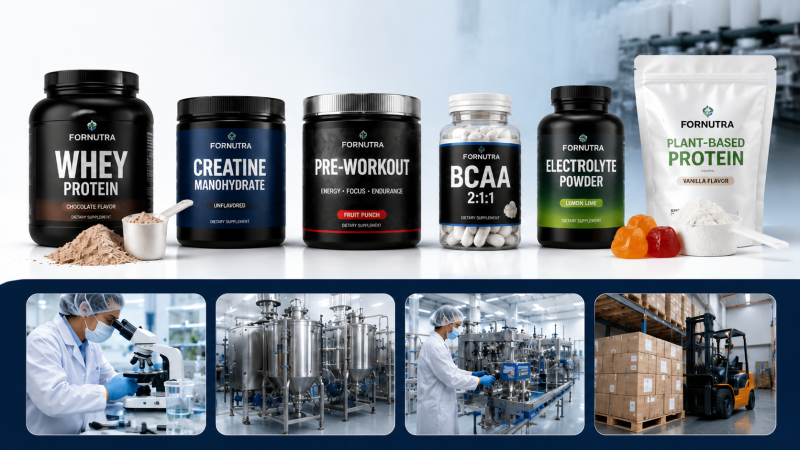
FORNUTRA offers comprehensive sports nutrition manufacturing services across powder, capsule, tablet, and gummy formats.
Conclusion
The sports nutrition supplement manufacturing landscape continues to evolve. For brands navigating this environment, selecting the right manufacturing partner is one of the most consequential business decisions — directly affecting product quality, brand reputation, and commercial success.
An experienced partner brings more than production capacity: formulation expertise, quality systems, regulatory knowledge, and supply chain reliability that transform product concepts into commercial realities. FORNUTRA offers OEM, ODM, and private label manufacturing services across powder, capsule, tablet, and gummy formats — providing the flexibility, quality assurance, and production capability that sports nutrition brands require.
To discuss your sports nutrition manufacturing requirements — whether a new product concept, an existing formula ready for scaled production, or a brand expansion into new formats — Contact FORNUTRA to begin a conversation about how we can support your product goals.
Frequently Asked Questions
What do sports supplement manufacturers do?
Sports supplement manufacturers produce nutritional products for athletes and active individuals, including protein powders, pre-workout formulas, amino acid supplements, and recovery products. Their services span raw material sourcing, formulation development, blending and production, quality testing, packaging, and labeling. Full-service manufacturers also offer OEM, ODM, and private label solutions, supporting brands from product concept through commercial production, including regulatory compliance guidance and supply chain management.
How do I choose a sports nutrition manufacturer?
Selecting a manufacturer requires evaluating category-specific experience, quality certifications (GMP, ISO), third-party testing protocols, production capacity and scalability, R&D capabilities, MOQ flexibility, packaging options, and export support. Communication quality and responsiveness are equally important. Requesting samples, visiting facilities when possible, and speaking with existing clients provide additional insight into prospective partners.
What certifications should a sports supplement manufacturer have?
At minimum, a manufacturer should hold GMP certification, verifying production follows established quality standards. Additional indicators of robust quality systems include ISO 9001 for quality management, ISO 22000 for food safety, and HACCP for hazard analysis. Depending on target markets, brands may value NSF Certified for Sport or Informed Sport certification. The relevant certifications depend on product categories, target markets, and distribution channels.
Can I create my own sports supplement formula?
Yes, most manufacturers offer custom formulation services. The process begins with a formulation brief outlining desired ingredients, dosages, format, flavor profile, and target consumer. The R&D team develops prototypes, conducts stability and compatibility testing, and refines the product through sensory evaluation. Custom formulation requires longer development timelines and higher MOQs than ODM or private label but provides maximum product differentiation.
What is the MOQ for private label sports supplements?
MOQs vary by manufacturer, product type, and packaging format. Powder supplements may start from several hundred units, while capsules and tablets have different minimums based on tooling and line configuration. Some manufacturers offer flexible MOQs for emerging brands and market testing. Brands should discuss MOQ requirements early in the evaluation process, as this directly affects launch planning and inventory investment.
How long does sports supplement production take?
Production timelines depend on the development pathway. Private label products using existing formulations may ship within several weeks. ODM with minor customization requires additional time for label design and packaging. Custom formulation development takes the longest — from several weeks to multiple months — depending on complexity, ingredient sourcing, and stability testing. Brands should discuss timelines during initial consultations and build appropriate lead time into launch planning.