
Liquid Supplement Manufacturing: From Formulation to Bottling — A Complete Production Guide
The global liquid dietary supplement market is projected to reach USD 78.3 billion by 2030, driven by faster ingredient availability, easier swallowing, and precise dosing flexibility compared to traditional capsules and tablets. For health brands, e-commerce sellers, and supplement distributors, this shift demands partnership with a professional liquid supplement manufacturer capable of delivering consistent quality, regulatory compliance, and scalable production. This guide covers every stage of liquid supplement production — from formulation through bottling — the technical challenges liquid supplement manufacturers navigate, packaging and quality control protocols, and how to evaluate manufacturing partners for your brand's specific needs. Liquid formulations may offer advantages such as faster ingredient availability and easier consumption compared with some traditional supplement formats. For brands sourcing from a liquid dietary supplement manufacturer, this format advantage is a key market differentiator. Demographic tailwinds include aging populations with swallowing difficulties, health-conscious consumers seeking on-the-go formats, and parents needing easy-to-administer children's supplements. For supplement brands, liquid formats also create opportunities for premium positioning, customized dosing formats, and differentiated product lines across e-commerce and retail channels. The versatility of liquid manufacturing allows brands to develop a wide spectrum of product types through a single liquid supplement manufacturer. The three primary formulation categories include: Water-soluble vitamins (B-complex, vitamin C) and fat-soluble vitamins (A, D, E, K) formulated as single-nutrient drops or multi-vitamin syrups. Ideal for daily wellness, immunity support, and children's nutrition lines. Essential minerals including zinc, magnesium, iron, calcium, and trace mineral blends in ionic liquid form. These formulations help maintain electrolyte balance, bone health, and metabolic functions. Botanical extracts from echinacea, elderberry, ashwagandha, turmeric, milk thistle, and other botanical ingredients. Often produced as alcohol-based tinctures or glycerin-based alcohol-free extracts for broader market appeal. Professional liquid supplement manufacturers follow a structured, multi-stage production process ensuring product uniformity, ingredient stability, and microbial safety. Understanding this flow helps brand owners evaluate technical capability and identify quality gaps before committing to production. Purpose: Active ingredients, excipients, and carriers are combined in a specified solvent system (purified water, glycerin, ethanol, or a blend). Temperature, pH, and agitation speed are precisely controlled. Key Considerations: Ingredient solubility profiles vary significantly — some actives dissolve readily while others require pre-treatment or co-solvents. A liquid supplement contract manufacturer with formulation expertise can recommend optimal solvent systems that balance stability with palatability. Purpose: High-shear mixing or high-pressure homogenization ensures uniform dispersion of all components, preventing ingredient stratification. This step is critical for suspensions and emulsions. Quality Impact: Inadequate homogenization leads to inconsistent dosing — each bottle may contain different active ingredient concentrations. Professional liquid supplement manufacturers validate homogenization time and intensity through particle size analysis. Purpose: Multi-stage filtration removes undissolved particulates, microbial contaminants, and process-related impurities. Filter pore sizes typically range from 0.2 to 5 microns depending on the product type. Key Considerations: Over-filtration can strip beneficial compounds; under-filtration compromises clarity and safety. The filtration protocol must be tailored to each formulation's physical characteristics. Purpose: The homogenized, filtered liquid is dispensed into bottles, dropper assemblies, ampoules, or stick packs using automated volumetric or gravimetric filling equipment. Fill volume accuracy is continuously monitored. Quality Impact: Inconsistent fill volumes create regulatory liability and consumer dissatisfaction. GMP-compliant liquid supplement manufacturers maintain fill accuracy within ±1% of target volume. Purpose: Terminal sterilization — through heat treatment (pasteurization), UV irradiation, or aseptic processing — eliminates vegetative microorganisms and ensures shelf-life stability. The method selected depends on the formulation's thermal sensitivity. Key Considerations: Heat-sensitive ingredients such as probiotics, enzymes, and certain botanical compounds require non-thermal sterilization approaches. A capable liquid supplement contract manufacturer maintains multiple sterilization technologies to accommodate diverse formulations. Liquid supplement manufacturing presents unique technical challenges that distinguish it from solid-dose production. Unlike capsules or tablets — where ingredients are physically separated and protected by coatings — liquid formulations keep all components in continuous contact. This creates complex stability dynamics that professional liquid supplement manufacturers must manage through formulation expertise and process control. For brands evaluating potential manufacturing partners, understanding these challenges helps separate technically capable producers from those who may compromise product quality. Packaging selection is a strategic decision with direct implications for product stability, consumer experience, brand positioning, and logistics cost. Leading supplement packaging manufacturers and liquid filling operations collaborate to ensure packaging compatibility with each formulation's chemical profile and shelf-life requirements. Different packaging formats serve different market segments and usage scenarios. A knowledgeable liquid supplement manufacturer offers multiple packaging options and guides brands toward the optimal choice based on their target market and distribution channel. Suitable Applications: Multiple-serving liquid vitamins, mineral supplements, botanical tinctures, and children's syrup formulations. Advantages: Excellent chemical compatibility, established consumer familiarity, premium shelf presence, and compatibility with various closure systems including dropper caps and child-resistant closures. Production Considerations: Glass offers superior oxygen and moisture barrier properties compared to PET, but adds weight and freight cost. Amber or cobalt glass provides UV light protection for photosensitive ingredients. Suitable Applications: High-potency liquid drops, concentrated botanical extracts, CBD/functional oil blends, and pediatric formulations requiring precise dosing. Advantages: Built-in graduated dropper enables accurate, consistent dosing without additional measuring tools. Consumers perceive dropper packaging as professional and premium. Production Considerations: Dropper calibration validation is critical — each unit must deliver consistent drop volume. Rubber bulb materials must be compatible with the liquid formulation to prevent leaching or swelling. Suitable Applications: Beauty-from-within shots, high-dose vitamin boosters, probiotic liquids, and travel-friendly wellness formats. Advantages: Hermetic sealing provides maximum protection against oxygen, light, and microbial contamination. Single-dose format eliminates preservative requirements and enables premium pricing. Production Considerations: Glass ampoule filling requires specialized aseptic equipment. Plastic single-dose alternatives using blow-fill-seal technology offer lightweight, shatter-resistant options. Suitable Applications: On-the-go liquid supplement shots, energy boosters, hydration formulations, and sample-sized trial products. Advantages: Ultra-portable, lightweight, ideal for e-commerce fulfillment, excellent branding surface area, and reduced packaging waste compared to rigid containers. Production Considerations: Film laminate selection must provide adequate barrier properties for the specific formulation. Heat-seal integrity testing is essential to prevent leakage during distribution and retail display. Quality control in liquid supplement production encompasses raw material verification, in-process monitoring, finished product testing, and stability validation. Reputable liquid supplement manufacturers operate QC laboratories integrated directly into production — not outsourced — enabling real-time quality decisions. The following protocols represent the minimum standard brands should require from any dietary supplement manufacturer. Every production batch undergoes testing for total aerobic plate count, yeast and mold, coliforms, E. coli, Salmonella, and Staphylococcus aureus. USP <61> and <62> methods are the industry standard. For preservative-free formulations, microbial limits testing at multiple shelf-life time points is essential. High-performance liquid chromatography (HPLC), gas chromatography (GC), and inductively coupled plasma mass spectrometry (ICP-MS) verify that each active ingredient meets label claim specifications. Testing occurs at three stages: incoming raw materials, post-blending bulk liquid, and finished packaged product. Accelerated stability studies (typically 40°C / 75% RH for 6 months) and real-time stability studies (25°C / 60% RH for the full labeled shelf life) validate that active ingredient potency, physical appearance, and microbial quality remain within specification throughout the product's intended shelf life. Vacuum decay testing, dye penetration testing, and torque verification ensure that every bottle closure maintains an airtight seal. For induction-sealed bottles, random sampling and destructive testing validates seal consistency across the production run. Failed seals compromise both product safety and shelf-life stability. Beyond understanding production, brand owners need clarity on what working with a liquid supplement contract manufacturer looks like from first inquiry to final delivery. The typical OEM development journey follows six stages: Share your product concept, target market, dosage form preferences, and budget parameters. The manufacturer's R&D team evaluates feasibility, proposes ingredient options, and outlines a development timeline and cost estimate. Formulation scientists develop prototype batches based on your specifications — adjusting active ingredient levels, excipients, flavor systems, and preservatives to meet your label claims and stability requirements. You receive lab-scale samples for evaluation. This stage includes sensory assessment, stability screening, and your internal team review. Iterations refine the formulation until the prototype meets your approval. A small-scale production run validates that the formulation performs consistently at manufacturing scale. Pilot batches also generate stability study samples and serve as pre-market evaluation units. Full-scale production proceeds only after pilot validation passes all quality checks. Every batch undergoes in-process testing and finished-product release testing before shipment approval. Finished product is filled into your selected packaging format, labeled, cartoned, and prepared for shipment. Complete documentation — including Certificate of Analysis and batch records — accompanies every order. Selecting a liquid supplement contract manufacturer is a consequential business decision — the right partner accelerates time-to-market and reduces risk; the wrong one generates recalls and reformulation costs. Evaluate potential partners across six capability areas: Does the manufacturer maintain an in-house R&D team with formulation scientists? How many proven liquid formulations exist in their library? Can they develop custom formulations from your concept brief, or do they offer only stock formulas? The strongest dietary supplement manufacturer partners bring proactive formulation recommendations based on recommendations based on ingredient synergy research and market trend analysis. Beyond offering a formula catalog, can the manufacturer customize every parameter — active ingredient levels, flavor profile, sweetness system, preservative choice, viscosity, and color — to match your brand's unique positioning? Full customization separates a true liquid supplement contract manufacturer from a basic co-packer. Assess current production capacity against your projected volumes. Can the manufacturer accommodate your minimum order quantity (MOQ) for market entry, then scale to container-load volumes as your brand grows? Evaluate lead times for raw material procurement, production scheduling, and quality release testing. Verify GMP certification, FDA facility registration, ISO standards, and any market-specific certifications required for your target regions (e.g., EU organic, Halal, Kosher). Request copies of current certificates and confirm they are independently audited — not self-declared. Evaluate whether the manufacturer offers integrated packaging solutions or in-house packaging capabilities or in-house packaging capabilities. Can they source and decorate bottles, droppers, labels, and cartons, or will you need to manage packaging suppliers separately? Integrated packaging streamlines supply chain coordination. Can the manufacturer provide documentation packages for market registration — Certificate of Analysis (CoA), Certificate of Free Sale, Master Manufacturing Record, stability study reports, and label compliance review? Strong regulatory support from your liquid supplement manufacturer reduces time-to-market for international expansion. FORNUTRA brings 17 years of dietary supplement manufacturing expertise to every liquid formulation project. With 6,000+ proven formulas, three R&D centers, and 30,000 sqm of GMP-certified manufacturing space, we serve as a comprehensive OEM and ODM partner for health brands worldwide. From initial concept evaluation and formula development to pilot production, packaging selection and bulk manufacturing, our integrated workflow supports brands at every stage of product development. We work with a diverse global client base — including e-commerce brands, regional distributors, pharmacy chains, and multinational health companies — offering flexible MOQ options that scale from market-entry pilot batches to full container-load production. Typical custom liquid supplement development cycles range from 4 to 6 weeks for new formulations, with accelerated timelines available for brands leveraging our existing formula library. Looking for a reliable liquid supplement manufacturer for your next product launch? FORNUTRA provides end-to-end OEM and ODM solutions, including custom formulation, liquid filling, packaging development, quality control and global delivery support. A liquid supplement manufacturer handles the complete production process for liquid dietary supplements — from raw material sourcing and custom formulation through blending, homogenization, filling, packaging, and quality testing. Full-service manufacturers also provide regulatory documentation, stability testing, and label compliance support. They serve as the production partner for brands that sell liquid vitamins, minerals, botanical extracts, and functional wellness liquids under their own labels. Professional liquid supplement manufacturers produce a wide range of formats including single-vitamin drops, multi-vitamin syrups, liquid mineral supplements, botanical tinctures and extracts, functional wellness shots, probiotic liquids, children's liquid supplements, and beauty-from-within drinkable formulations. The specific product types depend on the manufacturer's equipment capabilities, formulation expertise, and facility certifications. A comprehensive liquid supplement contract manufacturer typically offers glass bottles with dropper caps, PET plastic bottles with various closure systems, single-dose glass ampoules, stick packs and sachets for on-the-go formats, and child-resistant packaging for pediatric formulations. Package selection depends on the product's chemical profile, target market requirements, and brand positioning strategy. Typical production lead times from a liquid supplement contract manufacturer range from 6 to 12 weeks for a new custom formulation, including raw material procurement, formulation development, pilot batch production, stability testing, and full-scale manufacturing. Stock formula production using existing formulations can be completed in 4–6 weeks. Rush timelines may be available for brands with urgent market entry needs. Evaluate potential liquid supplement manufacturers based on GMP certification status, in-house R&D capability, custom formulation experience, minimum order quantity flexibility, packaging solution range, regulatory documentation support, and client references. Request a facility audit, review quality certifications, and assess communication responsiveness before committing to a manufacturing partnership. A capable liquid supplement contract manufacturer should demonstrate technical expertise and transparent production processes from the initial inquiry stage.
Why the Liquid Supplement Market Is Growing Fast
Liquid Vitamins, Liquid Minerals and Liquid Botanical Extracts
Liquid Vitamins
Liquid Minerals
Liquid Botanical Extracts
The Liquid Supplement Manufacturing Process
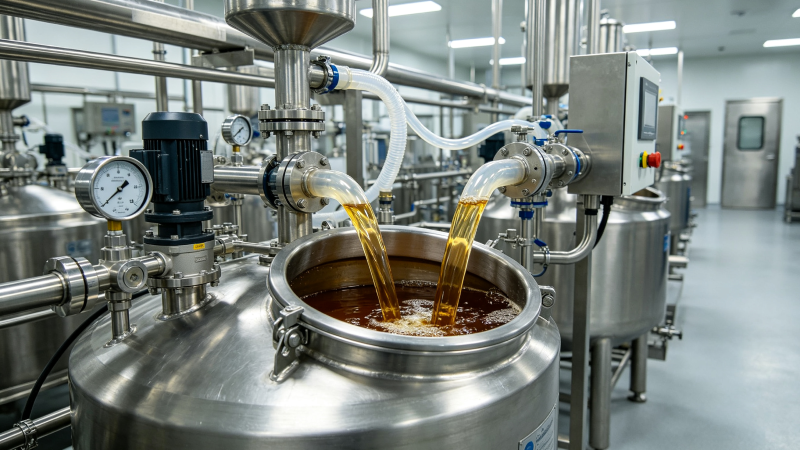
From Raw Material Dissolution to Final Sterilization
Raw Material Dissolution
Homogenization
Filtration
Filling
Sterilization
Technical Challenges for Liquid Supplement Manufacturers
Suspension Stability, Preservation and Taste Masking
Technical Challenge
Why It Matters
Manufacturing Solution
Suspension Stability
Particulates settle over time, leading to dose variability and consumer complaints about sediment at the bottle bottom.
Suspending agents (xanthan gum, microcrystalline cellulose), optimized particle size, and controlled viscosity ensure uniform distribution throughout shelf life.
Ingredient Separation
Oil-soluble and water-soluble ingredients can phase-separate in multi-phase formulations, compromising both appearance and potency.
Emulsifier systems (lecithin, polysorbates) and high-pressure homogenization create stable micro-emulsions that prevent phase separation.
Preservation
Aqueous liquid formulations are inherently susceptible to microbial growth, requiring effective preservation without compromising product safety.
pH adjustment, water activity control, natural preservatives (potassium sorbate, rosemary extract), and aseptic processing extend shelf life while maintaining clean-label positioning.
Taste Masking
Many active ingredients — particularly minerals, B vitamins, and botanical extracts — carry unpleasant taste profiles that impact consumer compliance.
Natural flavor systems, sweetness modulation, bitterness blockers, and encapsulated ingredients reduce off-notes without adding artificial additives.
Shelf-Life Stability
Active ingredient degradation over time may reduce product quality and labeled specifications before the expected expiration date.
Accelerated stability testing at elevated temperatures and humidity, antioxidant addition, oxygen-barrier packaging, and light-protective bottling validate real-time shelf-life claims.
Packaging Solutions for Liquid Dietary Supplement Manufacturers
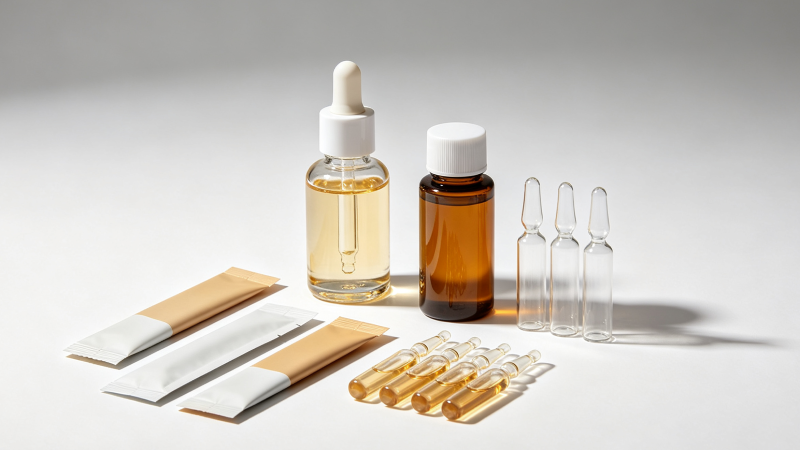
Bottles, Droppers, Ampoules and Stick Packs
Glass & PET Bottles
Dropper Assemblies
Ampoules & Single-Dose Units
Stick Packs & Sachets
Quality Control in Liquid Supplement Manufacturing
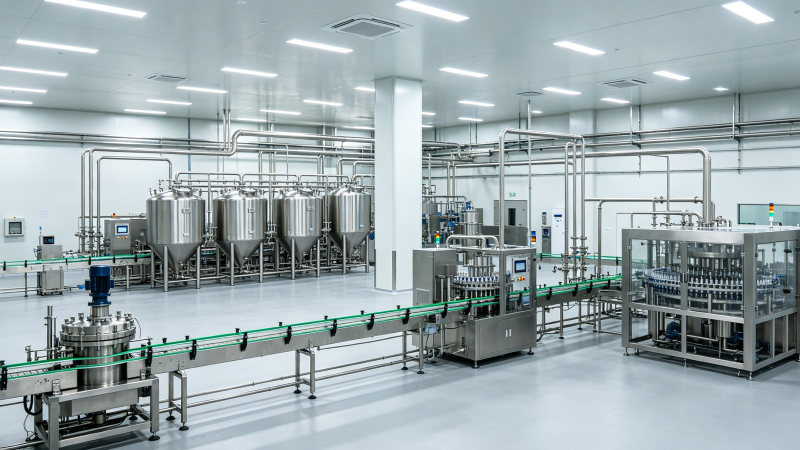
Microbial Testing, Content Stability and Seal Integrity
Microbial Testing
Active Ingredient Testing
Stability Testing
Seal Integrity Testing
Custom Liquid Supplement Development Process
Product Consultation
Formula Development
Sample Testing
Pilot Production
Bulk Manufacturing
Packaging & Delivery
How to Choose the Right Liquid Supplement Contract Manufacturer
R&D Capability
Custom Formulation Support
Manufacturing Capacity
Quality Certifications
Packaging Solutions
Regulatory Support
FORNUTRA — Your Liquid Supplement Manufacturing Partner
Start Your Custom Liquid Supplement Project Today
Frequently Asked Questions About Liquid Supplement Manufacturing
What Does a Liquid Supplement Manufacturer Do?
What Types of Liquid Supplements Can Manufacturers Produce?
What Packaging Options Are Available for Liquid Supplements?
How Long Does Liquid Supplement Manufacturing Take?
How Do I Choose a Reliable Liquid Supplement Contract Manufacturer?

